
Industries › Roofing Company
Retire From Your Roofing Company — and Keep Getting Paid
Roofing companies generate revenue through a mix of insurance-driven storm restoration work and standard replacement or repair projects sold directly to property owners.
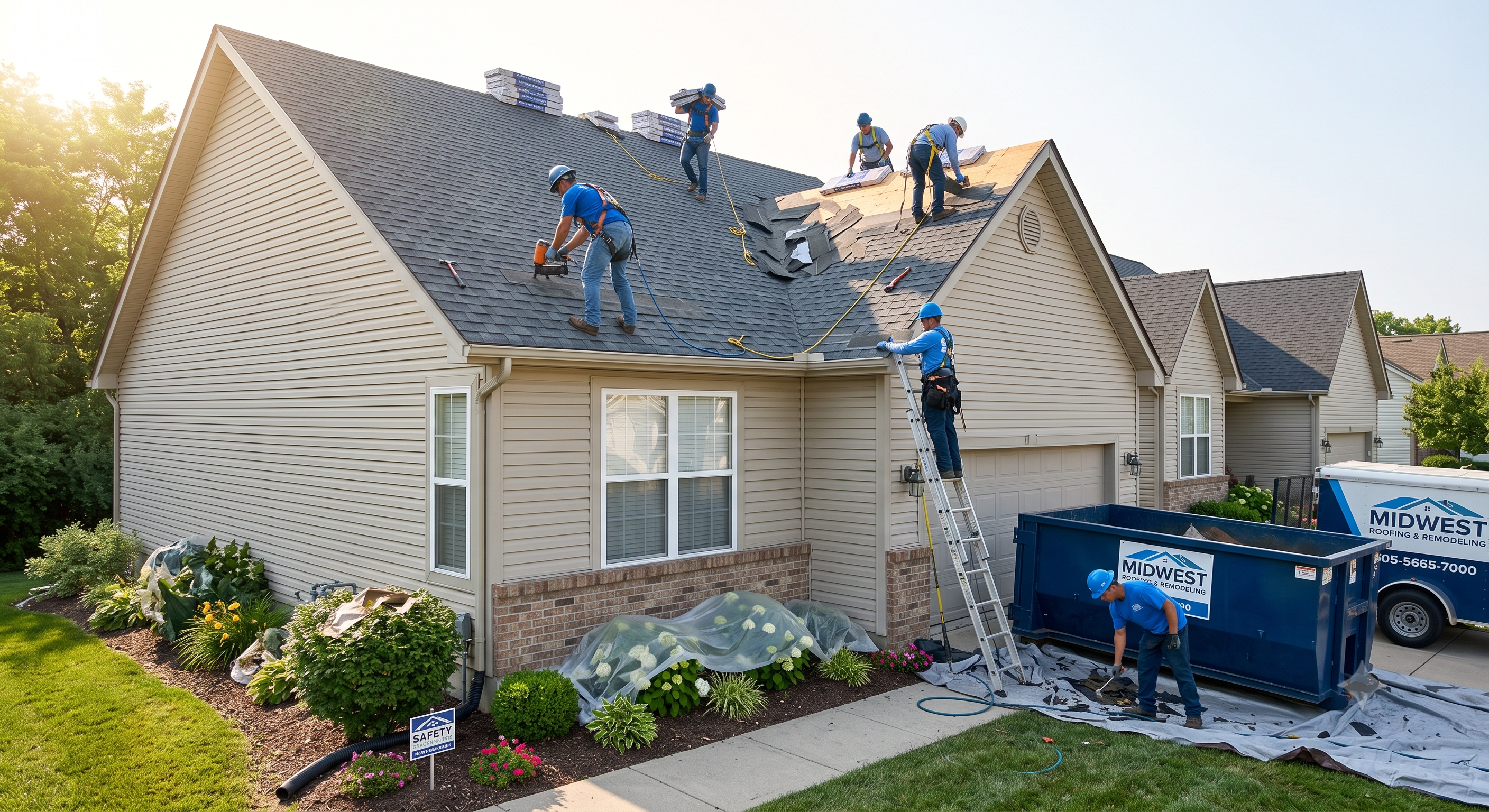
Why Roofing Company Owners Struggle to Retire
Storm-driven demand creates revenue variability tied to weather patterns and insurance claim cycles, while steady replacement and repair work provides a more predictable baseline — the balance between the two affects both risk and valuation.
Why the Roofing Company Fits Our Model Well
Because insurance restoration work depends heavily on adjuster relationships built by the owner personally, a transition plan typically includes a structured introduction period to those contacts.
What We Look At in a Roofing Company
- Ratio of insurance-restoration revenue to standard replacement/repair revenue
- Depth of insurance adjuster relationships
- Warranty backlog and manufacturer certifications
- Crew capacity and subcontractor dependency
Typical Financial Profile
Mid-sized roofing companies in the $1.5M–$2.5M revenue range typically run 12–15% owner profit margins, with businesses less dependent on storm-cycle spikes generally viewed as more stable.
What Happens to Your Employees and Customers
Crews, subcontractor relationships, and outstanding warranty obligations are generally carried forward without interruption through a properly managed transition.
Selling Your Roofing Company: Common Questions
How do I sell my Roofing Company?
The most common options are a broker listing, a private equity sale, or a direct retirement partnership like ours. A broker listing can take 12–24 months and costs 10–12% in commissions. Private equity typically requires flipping the business in 3–5 years. We buy directly, transition at your pace, and pay you monthly from the profits instead of a lump sum — no bank, no broker, no auction.
What is my Roofing Company worth?
Most Roofing Companys are valued at 2–4x their annual owner profit (also called SDE — seller's discretionary earnings). A business generating $200K in annual profit might be worth $400K–$800K. The real question isn't just the number today, but how much you receive in total — and our structure often delivers more over time than a discounted lump-sum sale.
Can I retire from my Roofing Company without using a broker?
Yes. You don't need a broker to retire from your business. We work directly with owners — no listing, no public auction, no commission. The process is completely confidential, which means your employees and customers don't find out you're considering a transition until you decide to tell them.
What happens to my employees when I retire from my Roofing Company?
In our model, your employees keep their jobs. We're not a private equity firm looking to cut costs — your team is what makes the business valuable, and we protect that. Same crew, same roles, same pay. Employee retention is a core part of how we operate.
How long does it take to retire from my Roofing Company?
It varies by business, but most transitions are underway within 60–90 days of agreeing on terms. We take as long as the business actually needs for a clean handoff. Unlike a broker listing that can sit on the market for 1–2 years with no guarantee of closing, our process moves on a schedule that works for your situation.
How does storm-driven revenue affect valuation?
Storm-driven spikes are typically normalized against several years of data rather than valued at peak-year figures, to reflect a more accurate baseline.
What happens to unresolved insurance claims during a transition?
Open claims are tracked and handled as part of the transition plan so homeowners and insurers see continuous point-of-contact service.