
Industries › Commercial Laundry Business
Retire From Your Commercial Laundry Business — and Keep Getting Paid
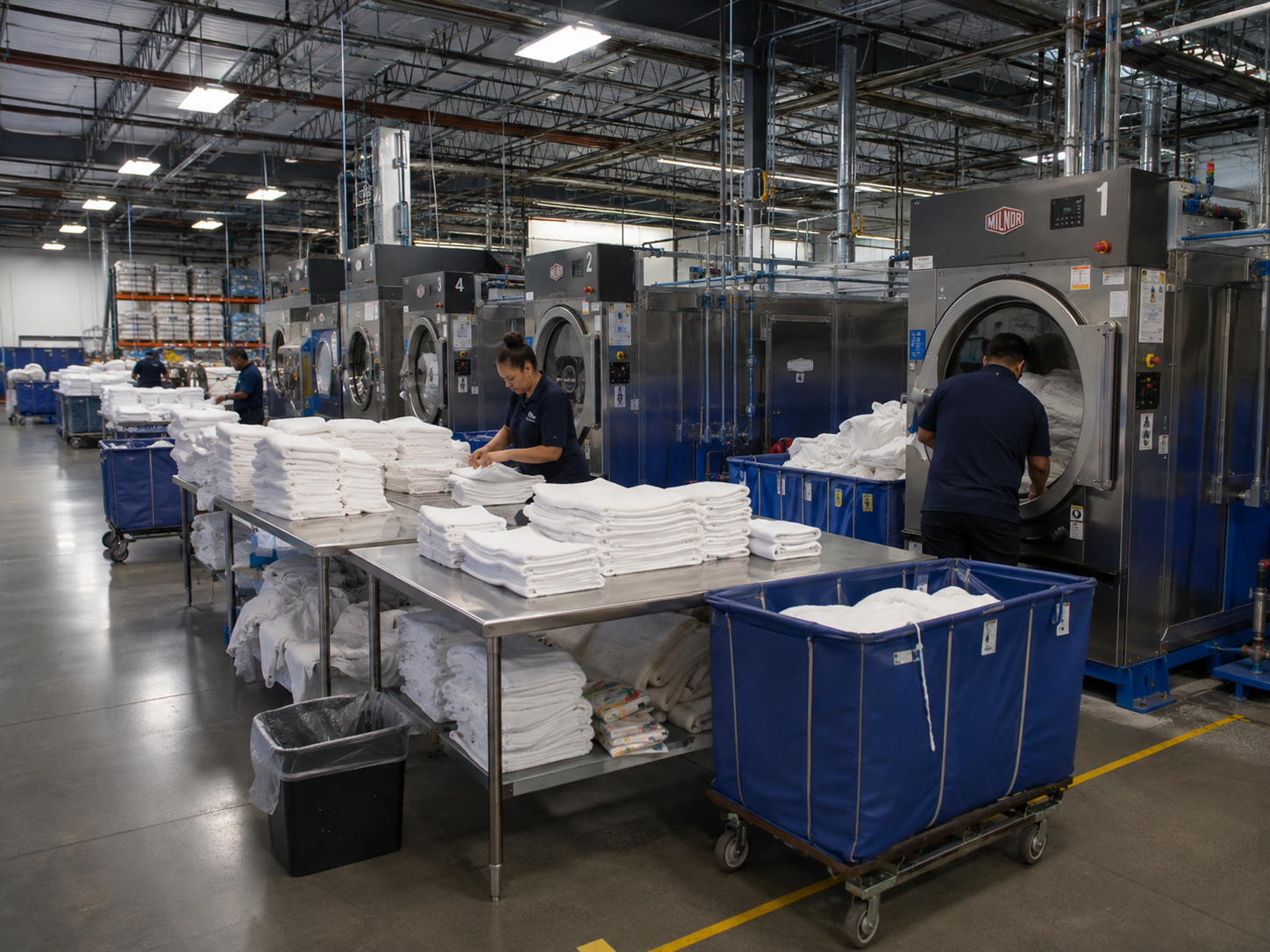
Commercial laundry operations provide washing, drying, and finishing services to hotels, restaurants, healthcare facilities, and other institutional clients — a recurring-revenue business built on long-term service contracts and route-based delivery.
Why Commercial Laundry Business Owners Struggle to Retire
Hotels, healthcare facilities, restaurants, and fitness clubs generate consistent, high-volume laundry demand that cannot easily be brought in-house, creating sticky commercial relationships with strong switching costs. Contract-based pricing and route delivery schedules produce predictable weekly and monthly revenue.
Why the Commercial Laundry Business Fits Our Model Well
Equipment condition and remaining useful life is a critical factor in this category due to the capital intensity of industrial laundry equipment, and a full equipment assessment is standard in any transition evaluation.
What We Look At in a Commercial Laundry Business
- Length and renewal terms of existing commercial service contracts
- Equipment age, condition, and remaining useful life of washers, dryers, and finishing equipment
- Client mix across hotels, healthcare, restaurants, and fitness — healthcare tends to command premium pricing
- Route efficiency and geographic concentration of client base
Typical Financial Profile
Commercial laundry operations with established institutional contracts commonly generate $800K–$3M in revenue with 18–28% owner profit margins, with higher margins for operations serving healthcare and hospitality at scale.
What Happens to Your Employees and Customers
Existing service contracts, delivery routes, and production staff are maintained without interruption through any transition to ensure client service continues uninterrupted.
Selling Your Commercial Laundry Business: Common Questions
How do I sell my Commercial Laundry Business?
The most common options are a broker listing, a private equity sale, or a direct retirement partnership like ours. A broker listing can take 12–24 months and costs 10–12% in commissions. Private equity typically requires flipping the business in 3–5 years. We buy directly, transition at your pace, and pay you monthly from the profits instead of a lump sum — no bank, no broker, no auction.
What is my Commercial Laundry Business worth?
Most Commercial Laundry Businesss are valued at 2–4x their annual owner profit (also called SDE — seller's discretionary earnings). A business generating $200K in annual profit might be worth $400K–$800K. The real question isn't just the number today, but how much you receive in total — and our structure often delivers more over time than a discounted lump-sum sale.
Can I retire from my Commercial Laundry Business without using a broker?
Yes. You don't need a broker to retire from your business. We work directly with owners — no listing, no public auction, no commission. The process is completely confidential, which means your employees and customers don't find out you're considering a transition until you decide to tell them.
What happens to my employees when I retire from my Commercial Laundry Business?
In our model, your employees keep their jobs. We're not a private equity firm looking to cut costs — your team is what makes the business valuable, and we protect that. Same crew, same roles, same pay. Employee retention is a core part of how we operate.
How long does it take to retire from my Commercial Laundry Business?
It varies by business, but most transitions are underway within 60–90 days of agreeing on terms. We take as long as the business actually needs for a clean handoff. Unlike a broker listing that can sit on the market for 1–2 years with no guarantee of closing, our process moves on a schedule that works for your situation.
How sticky are commercial laundry clients?
Very sticky — hotels and healthcare facilities in particular have high switching costs because laundry is operationally critical and changing providers requires retraining, retagging linen inventories, and adjusting internal processes. Churn rates are low.
How does equipment age affect the deal structure?
Older equipment in need of near-term replacement is factored into the valuation and transition terms — the assessment process accounts for remaining useful life and anticipated capital needs so both parties understand the full picture.